


An Example Web Design Process for Local Service Providers
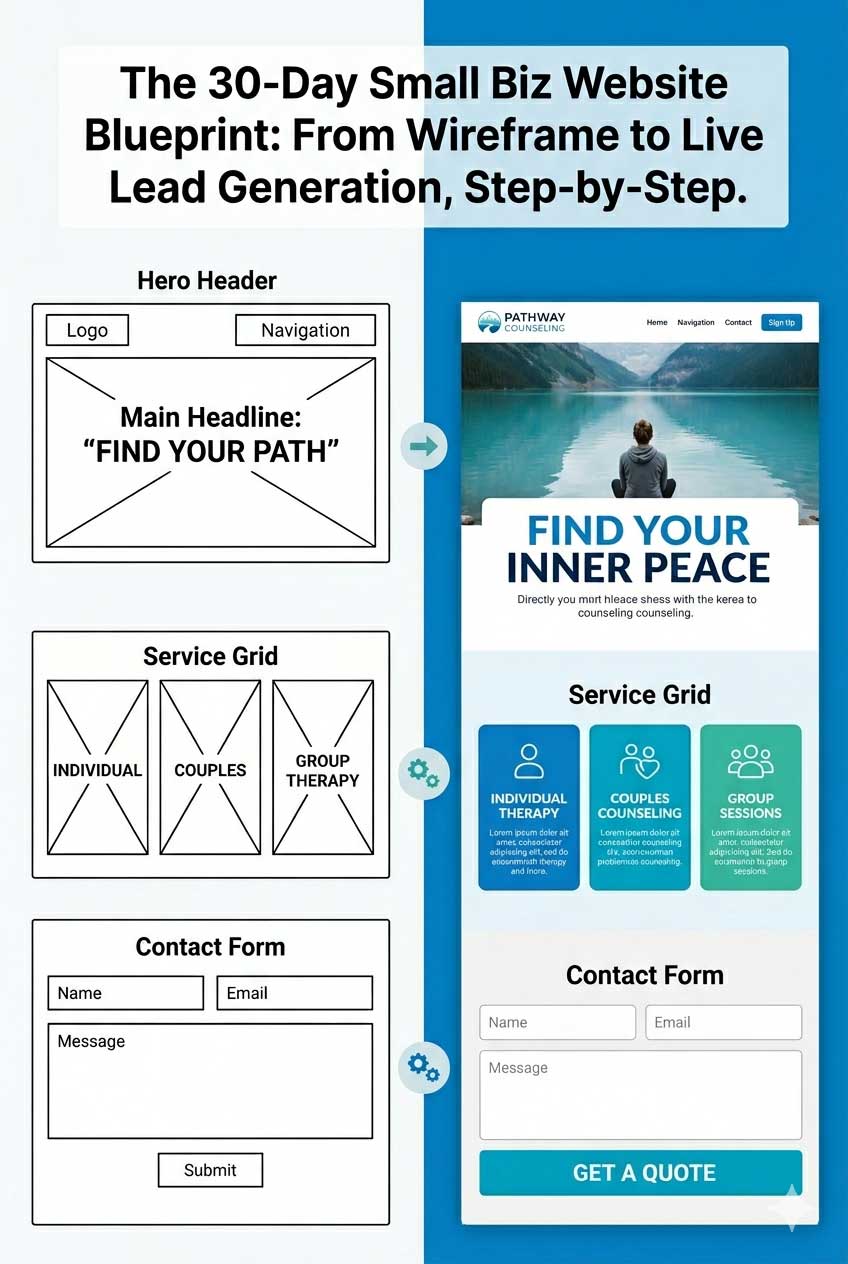
Ask ten business owners how websites get built and you'll probably hear ten versions of the same story. A template gets chosen, a logo is uploaded, a few pages are written, and a few weeks later the site goes live. If enquiries don't improve, the assumption is usually that the design wasn't modern enough or that more traffic is needed.
In reality, many local service websites struggle because they were built around appearance rather than decision-making.
Customers don't visit a website to admire it. They arrive with a question, a problem, or a task they need help with. The businesses that win more enquiries are often the ones that remove uncertainty faster than their competitors. Good web design plays a role in that process, but it starts much earlier than most people realise.
Understanding How Customers Actually Buy
Before discussing layouts, colours, or functionality, it's worth understanding how potential customers move from recognising a problem to making contact.
Take a local plumber as an example. Someone dealing with a burst pipe has very different priorities from someone planning a bathroom renovation. The first person wants reassurance that help is available quickly. The second wants evidence of quality workmanship, previous projects, and a clear idea of costs.
Yet many websites present exactly the same information to both visitors. They describe the business in broad terms without acknowledging why people have arrived in the first place. When that happens, the site feels generic, even if the business itself is excellent.
A good design process begins by identifying the different situations that bring customers to the website and understanding what information they need before they feel comfortable making contact.
Finding the Questions Competitors Leave Unanswered
One of the most useful exercises during a website project has nothing to do with design. It involves studying competing websites and looking for what is missing.
Most local service businesses make remarkably similar claims. They're experienced, reliable, professional, and committed to customer satisfaction. After visiting a handful of competitor sites, those messages begin to blend together.
The opportunity often lies elsewhere.
What questions does a potential customer still have after reading those websites? How quickly can work begin? What happens after an enquiry is submitted? Are quotations free? Which areas are covered? How long does a typical project take?
Businesses that answer these practical questions gain an advantage because they reduce uncertainty. They help visitors move closer to a decision while competitors remain focused on broad marketing statements.
Creating the Structure Before the Design
Many people imagine web design beginning with visual concepts, but structure usually comes first. Before a page can look good, it needs to make sense.
Visitors should be able to find information naturally, without having to hunt for it. Service pages should explain services. Case studies should demonstrate results. Contact information should be easy to locate. It sounds simple, but many websites become cluttered because they try to place every possible piece of information on the homepage.
A better approach is to think about the customer's journey. What do they need to know first? What questions are likely to come next? What information will help them feel confident enough to make contact?
When the structure is clear, the design has a much stronger foundation to work from.