Home / Case studies / Dinsdales Removals & Storage
Case study · Removals company website redesign
A 12-year-old removals website, rebuilt so it works on a phone.
Dinsdales Removals & Storage is a family firm in Lytham St Annes. Their website had not changed since 2018 and was built for desktop screens long before that. I rebuilt it as a fast, mobile-friendly site, kept every word their customers already knew, and kept every page address so nothing was lost in Google.
- ClientDinsdales Removals & Storage
- TradeRemovals, packing, storage
- WhereLytham St Annes, Lancashire
- ProjectFull rebuild, 2026
Before and after
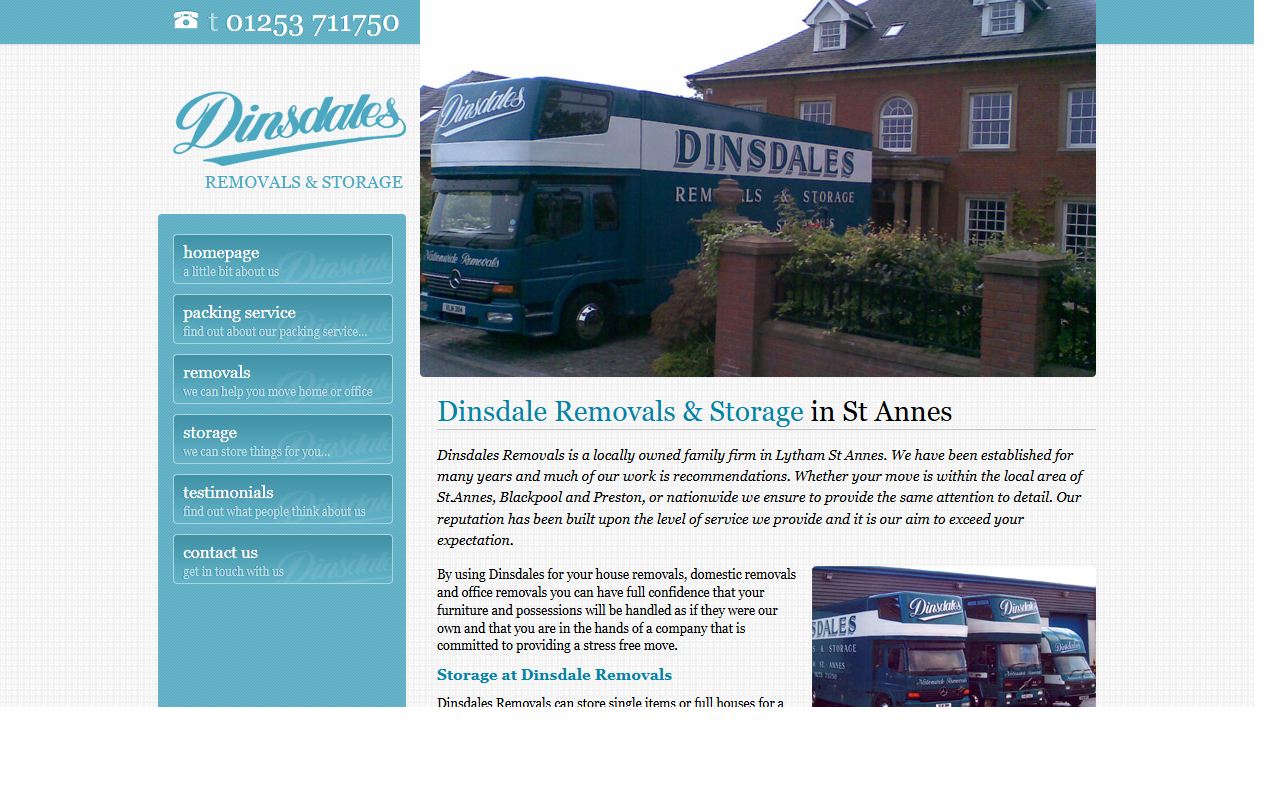
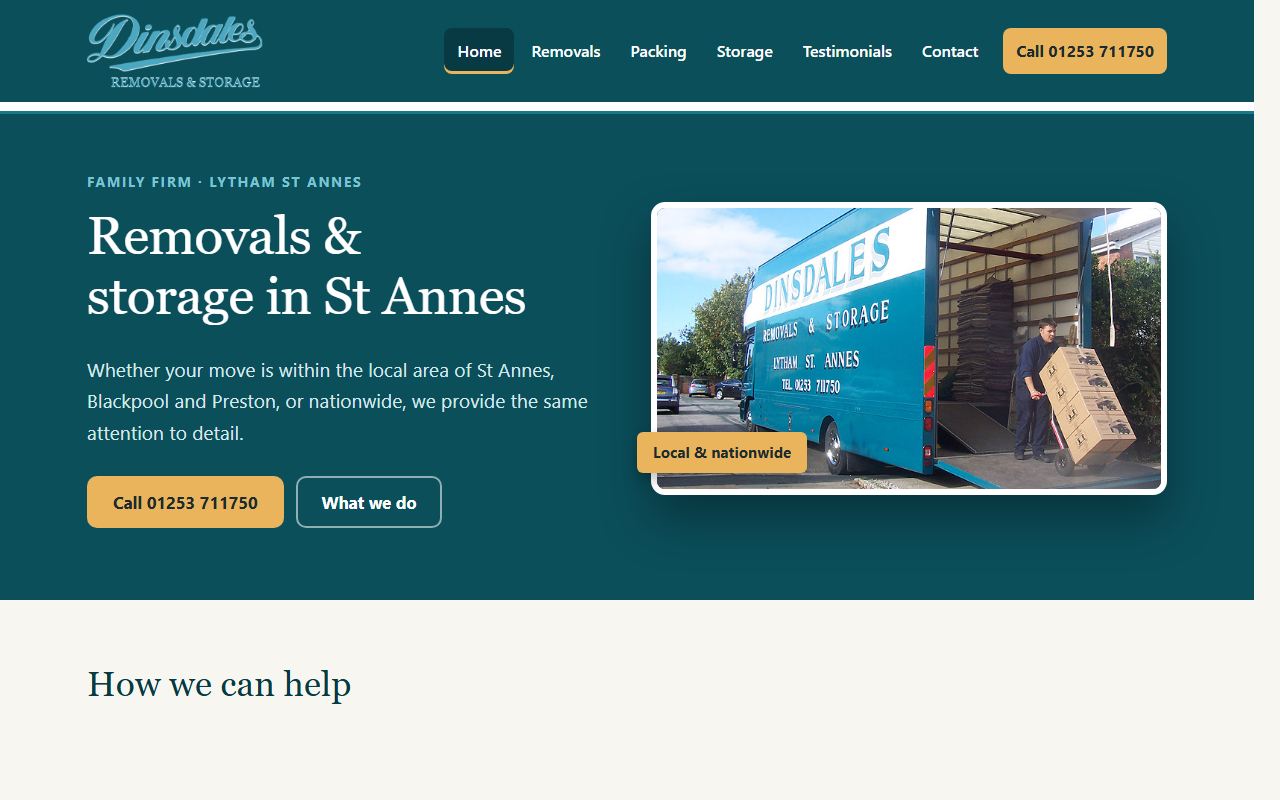
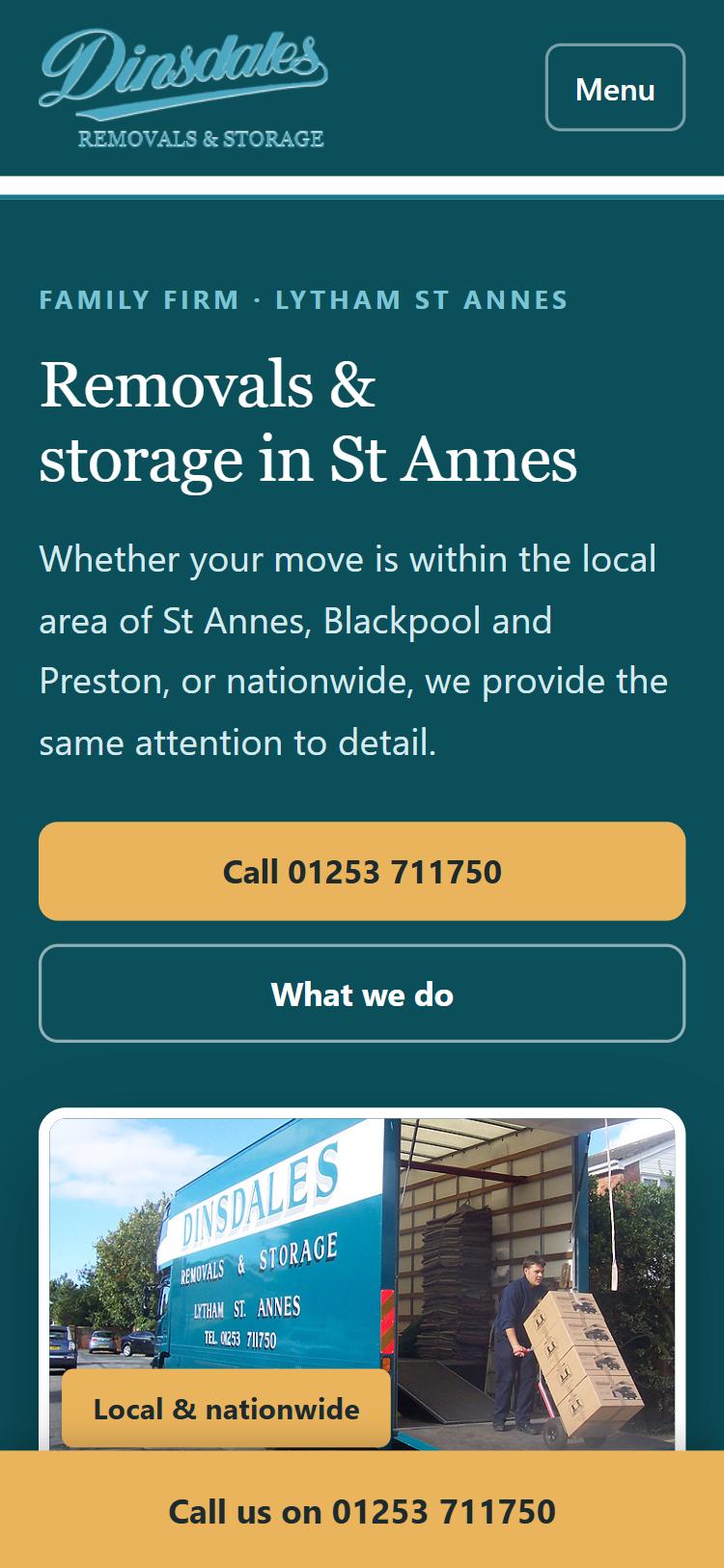
On a phone
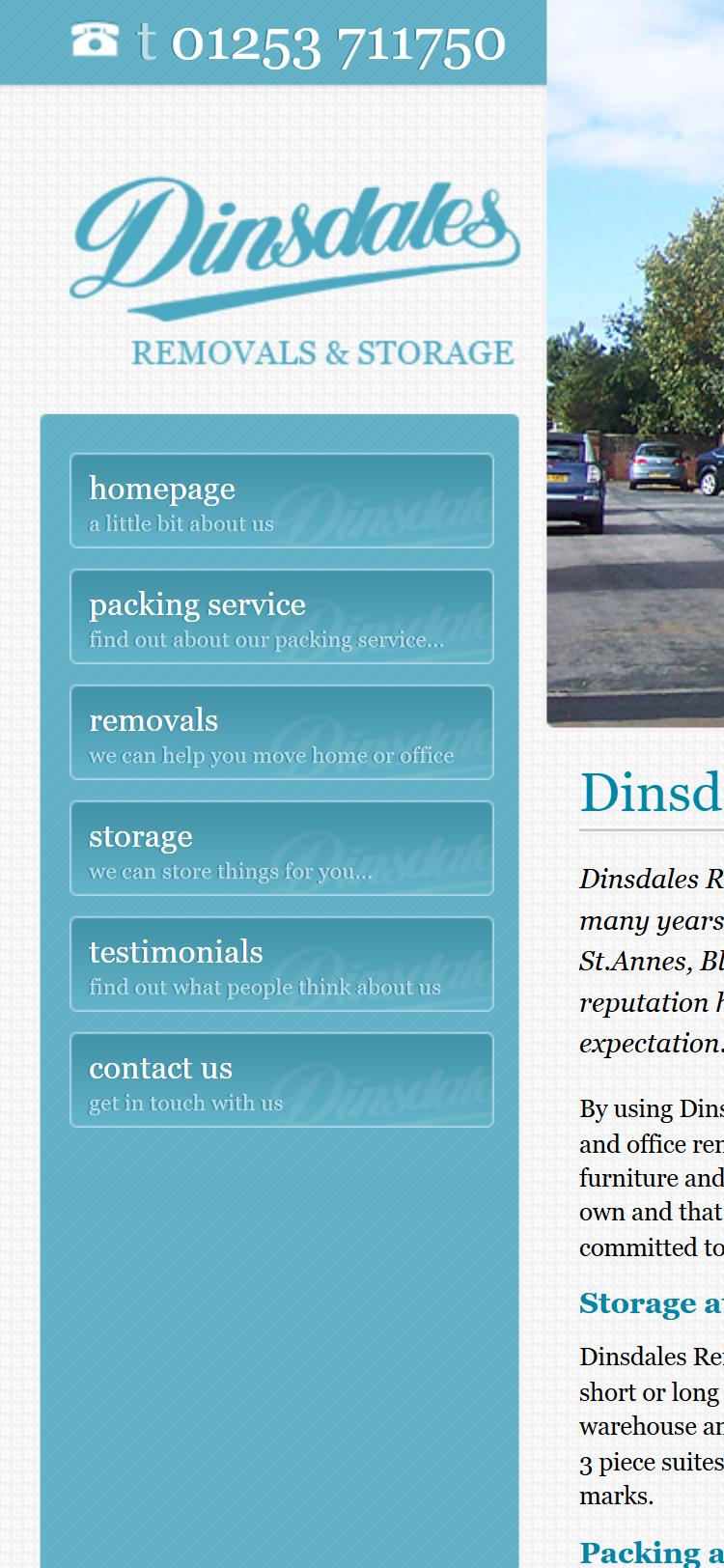
The problem with the old site
Nothing was broken, which is exactly why sites like this get left. It still loaded and the phone number was still right. But most people looking for a removals firm today are searching on a phone, and for them the site was close to unusable.
- Not mobile-friendly. A fixed 960-pixel layout with no phone version at all.
- Code from another era. A 2010 release of jQuery driving an image slider, plus special style sheets for Internet Explorer 6, 7 and 8.
- Titles written for search engines, not people. Three pages shared the same page title, and every heading was a string of keywords such as "Removals St Annes | Home & Office Removals | St.Annes, Lytham, Blackpool, Preston".
- The phone number could not be tapped. On a business that takes its enquiries by phone.
- A privacy page that was not true. It said the site used no cookies, while the pages still carried an old Google Analytics tag (one Google switched off in 2023) and an embedded Google map.
- No email address anywhere a customer would look for one.
What I built
A custom-built site of seven plain HTML pages and one style sheet. No WordPress, no database, no plugins, no logins. For a small brochure website that is the fastest and safest thing you can have: there is nothing to update and nothing to hack.
- Mobile-first design, tested at every width from a small phone (320 pixels) to a desktop monitor, with a "Call us" bar fixed to the bottom of the screen on phones.
- No JavaScript at all. The home page is four files and roughly a quarter of a megabyte, photos included.
- Every page address kept the same, so existing Google results, bookmarks and links from other sites all still work. No redirects needed, no rankings thrown away.
- Local SEO done properly. Each page has its own readable title and description, one clear heading, descriptive text on every photo, and the business name, address and phone number marked up so search engines can read them. There is a sitemap too.
- All the original wording kept, reorganised under plain headings: Removals, Packing, Storage, Testimonials, Contact. A new "Where we work" section spells out St Annes, Lytham, Blackpool, Preston and nationwide moves.
- An honest privacy page. The dead analytics tag is gone and the Google map is replaced with a cookie-free map and an "Open in Google Maps" button, so the site now really does set no cookies. No cookie banner required.
- Small things put right. The business name is written the same way throughout, spelling slips in customer testimonials are corrected, and the email address is on the contact page and in the footer.
Old site and new site, side by side
| Old site | New site | |
|---|---|---|
| On a phone | Fixed width, sideways scrolling | Fits any screen from 320 pixels up |
| Scripts | jQuery 1.4.2 and a slider plugin | None |
| Calling | Number shown as plain text | Tap-to-call buttons on every page |
| Page titles | Keyword lists, three pages identical | Unique and readable on every page |
| Search engine data | Meta keywords (ignored by Google) | Local business markup and a sitemap |
| Cookies | Analytics and Google map, undeclared | None |
| Page addresses | Identical, so nothing breaks | |
| Upkeep | Nothing to update, but nothing updated | Nothing to update, one script rebuilds every page |
Questions I get asked about rebuilds like this
Will I lose my Google ranking if my old website is rebuilt?
Not if the rebuild is planned around it. On the Dinsdales site every page kept its existing address, so links and search results pointing at the old site still land on the right page, and the wording customers were already finding was kept.
Does a small business website need WordPress?
Often not. A brochure site of a handful of pages can be plain HTML, with no database, no plugins and no logins. There is nothing to update and nothing to break into, and it loads faster.
Can you rebuild a website using the existing text and photos?
Yes. The Dinsdales rebuild used the wording, logo and photographs from the existing site, reorganised under clearer headings. New photos help, but they are not needed to start.
Is your website older than your van?
If your site was built ten or more years ago and you have to pinch the screen to read it on your phone, your customers do too. I rebuild old small business websites for removals firms, tradesmen and local services across Southport, Merseyside and Lancashire, and I can usually start from the site you already have.
See the finished site: dinsdalesremovals.co.uk. More case studies: S Spencer Landscapes, Southport.