


5 Signals Your Website is Scaring Away Local Clients (and How to Fix Them)
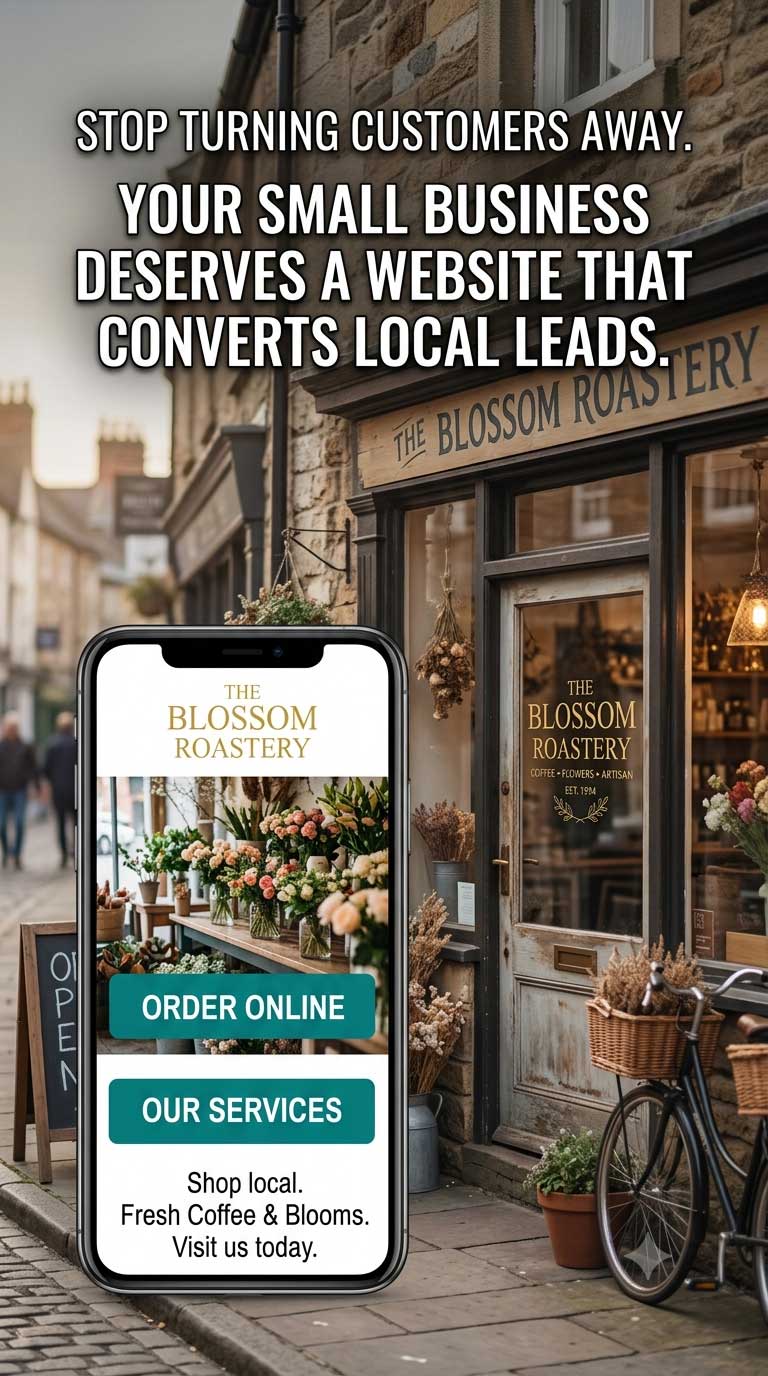
Most business owners assume a website's job is to attract customers.
In reality, many websites spend half their time doing the opposite.
A potential client lands on your homepage, spends less than a minute looking around, and leaves. They don't complain. They don't tell you why. They simply disappear and call someone else.
The frustrating part is that this often happens even when the business itself is excellent. The problem isn't always traffic. Sometimes it's trust. Here are five surprisingly common signals that quietly push local customers away—and what to do about them.
1. Your Website Looks Like It Could Belong Anywhere
Take a look at the average local business website.
The headline usually says something like:
"Professional Service You Can Trust."
The problem? Every competitor within twenty miles is saying exactly the same thing.
Local customers aren't just looking for competence. They're looking for evidence that you're part of their area and understand their specific situation.
Someone searching for a plumber in York isn't really searching for "professional plumbing services." They're searching for someone who knows York's housing stock, common pipe issues, response times, parking restrictions, and local reputation.
Generic language removes all of those clues.
The Fix
Replace broad statements with local specificity. Instead of:
"Providing quality roofing solutions."
Try:
"Helping homeowners across Cheltenham repair storm damage and ageing slate roofs."
Specificity feels real. Real feels trustworthy.
2. You Talk About Yourself Before Solving the Visitor's Problem
Many websites open with a history lesson. "We were founded in 2008..."; "Our mission is..."; "Our team is passionate about...". None of those facts are inherently bad. They are simply arriving too early.
When a visitor lands on your website, they're carrying a question in their head: "Can you solve my problem?".Until that question is answered, they rarely care about your company story.
Think about walking into a shop and asking for help, only for the owner to spend five minutes explaining when the business was founded.
It feels backwards.
The Fix
Lead with the customer's situationl; address the problem first; establish that you understand it then introduce your experience as proof that you can help.
Your story matters. It just works better after relevance has been established.
3. Every Photo Looks Like a Stock Image
Visitors may not consciously notice stock photography, but they feel its effect. The smiling call-centre worker with a perfect headset, the group of colleagues pointing at a laptop.
The builder whose pristine hi-vis jacket somehow lacks a single mark.
These images create distance. Local businesses thrive because people want human connection. Stock photography removes the human element and replaces it with something that feels manufactured. A slightly imperfect photograph of your actual team often outperforms a professionally staged image from a stock library.
Why?
Because authenticity is easier to trust than polish.
The Fix
Use real photographs wherever possible. Show your premises and completed projects. Show vehicles, staff, equipment, and even the local landmarks customers recognise.
A genuine image that tells a real story is worth far more than a flawless stock photo.
4. Your Testimonials Don't Sound Believable
Many websites display testimonials that read like they were written by a marketing department.... "Outstanding service. Highly professional. Would recommend."
Technically positive - Practically useless. Strong testimonials contain detail, they describe a problem, a solution, and an outcome.
A homeowner explaining how a contractor fixed a leaking roof before a weekend storm is more persuasive than ten generic compliments.
The reason is simple: details are difficult to fake.
The Fix
Ask customers for specifics.
Instead of requesting a review, ask questions such as:
- What problem were you facing?
- Why did you choose us?
- What was the result?
The answers often produce stronger testimonials than anything you could write yourself.
5. Your Contact Page Creates Friction
Many local businesses accidentally make it difficult to get in touch. A visitor arrives ready to call but the phone number is buried in a footerand the contact form asks for eight pieces of information.
There are no opening hours, no indication of response timesno explanation of what happens next.
At this point, even interested prospects begin to hesitate. Every extra step creates an opportunity to leave and unlike a physical shop, a website visitor can disappear with a single click.
The Fix
Reduce effort wherever possible - Make your phone number visible, display opening hours clearly, explain what happens after a form is submitted and tell people when they can expect a response.
Small reductions in friction often produce surprisingly large increases in enquiries.
The Bigger Picture
Most local businesses don't lose customers because they're bad at what they do - they lose customers because their websites fail to communicate trust quickly enough.
Visitors make judgements at remarkable speed. Long before they compare prices or read service pages, they're asking themselves a simpler question:
"Does this business feel genuine?"
Local specificity, real photographs, believable testimonials, clear messaging, and effortless contact options all contribute to that feeling.
When those elements are missing, prospects drift away. When they're present, your website stops acting like an online brochure and starts acting like your best salesperson.